
March 9th, 2026
At Tampa International Airport (TPA), a backend-to-frontend spatial experience evolution is happening in real time.
After successfully deploying a custom enterprise workplace app at SkyCenter One, 22Miles expanded from powering backend workplace systems to reimagining the passenger-facing front-end digital experience inside the airport terminal itself.
Here’s what that journey reveals about scaling from backend to front-end and why it matters.
Start Small, Then Scale Building Spatial Experiences That Actually Work
When organizations talk about improving their spatial experience, the conversation often jumps straight to the most visible elements: digital signage, interactive kiosks, AI assistants, mobile apps, and immersive wayfinding. It’s easy to focus on what people will see, but what’s harder and far less glamorous is talking about what has to work first.
Behind every intuitive map, real-time gate update, or desk-booking screen is a network of systems that have to communicate reliably. Authentication needs to be secure. Data needs to be accurate. Integrations need to hold up under daily use. If that layer isn’t stable, no amount of design polish will fix the frustration users feel.
That’s why the most effective spatial experiences rarely start big. They start contained, practical, and manageable.
Why “Start Small” Isn’t Playing It Safe, It’s Playing It Smart
In large environments like airports, hospitals, and universities, there’s often pressure to modernize everything at once. But replacing every screen or launching every feature at once introduces unnecessary risk. It overwhelms teams, complicates governance, and makes it harder to pinpoint what’s actually working.
Starting small gives organizations room to learn. It allows them to test integrations in a controlled environment, exposing real user behavior instead of assumed workflows. It builds internal trust across departments that may not always align on priorities. And perhaps most importantly, it proves that the infrastructure can support more.
A good example of this approach can be seen with Tampa International Airport. Before expanding its passenger-facing interactive experience inside the main terminal, the organization focused on a contained environment: SkyCenter One, its headquarters building.
The initial challenge wasn’t about travelers or public kiosks. It was about supporting a hybrid workforce inside one building and removing the daily friction employees were experiencing.
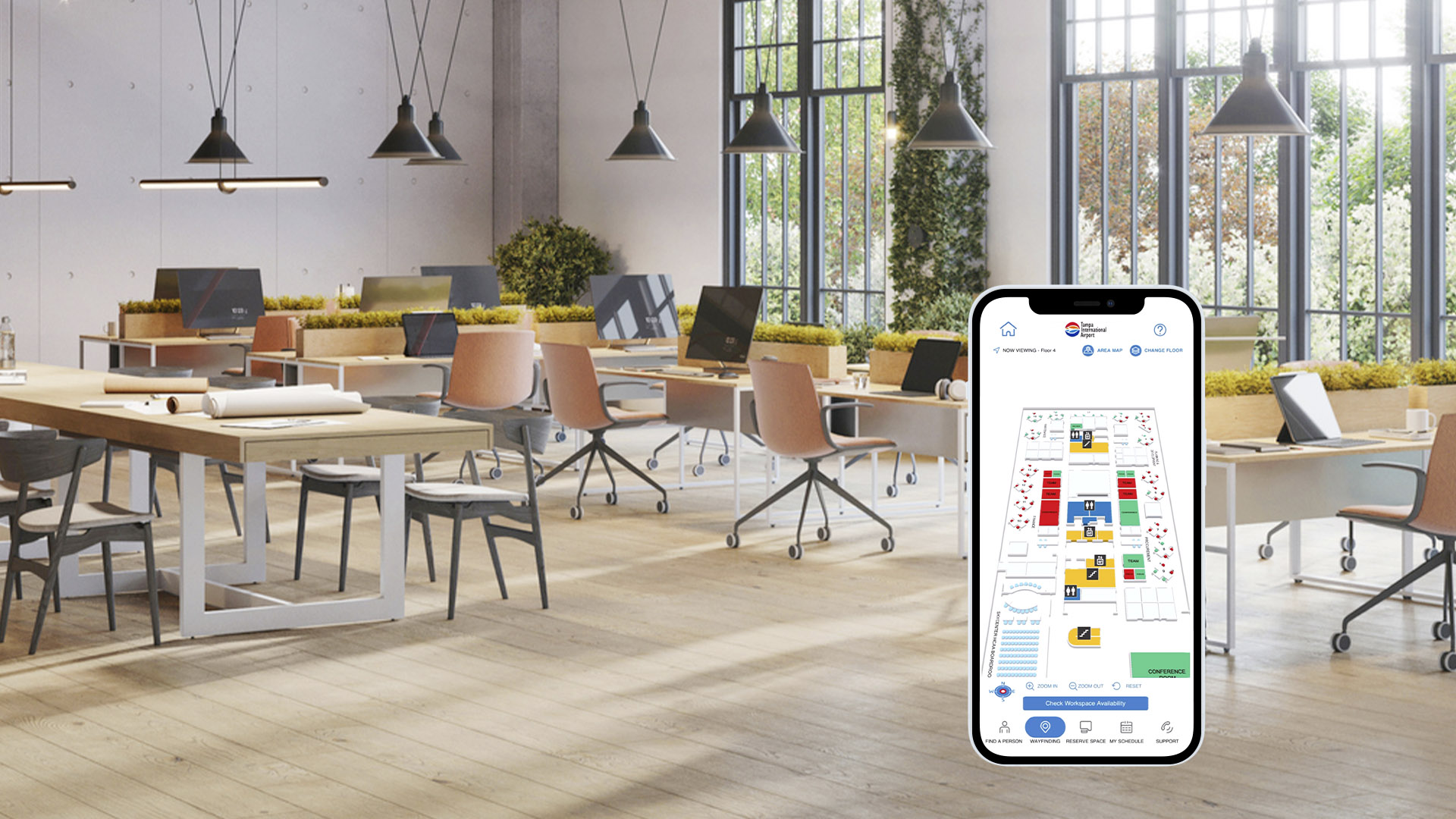
Staff needed to quickly locate meeting rooms without wandering unfamiliar floors. They needed confidence that a desk would be available when they arrived on-sit and they needed visibility into where colleagues were working. Administrative teams also needed accurate booking data without manually reconciling calendars.
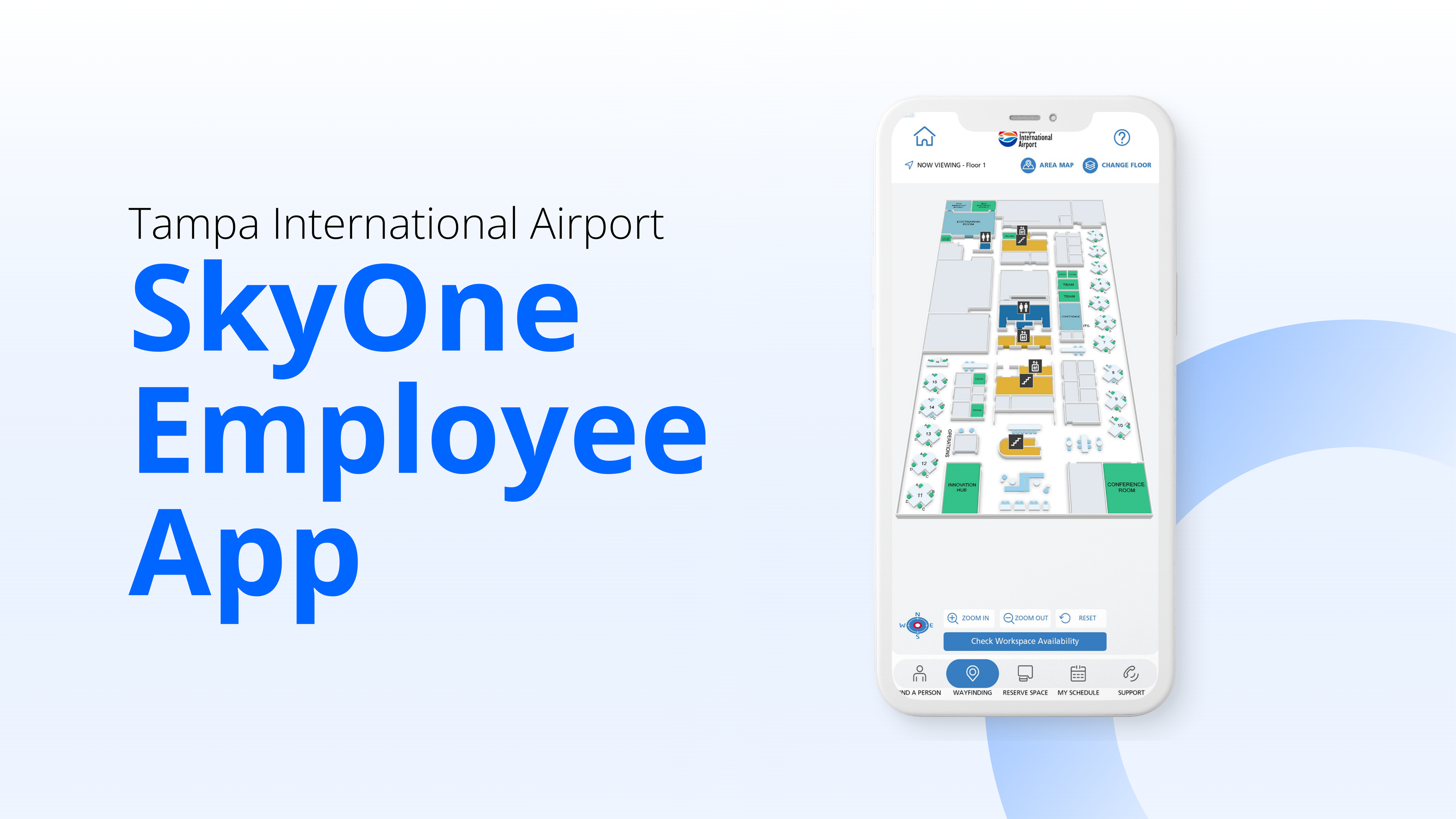
With 22Miles, they addressed those needs directly. Employees gained:
- 3D turn-by-turn wayfinding to meeting spaces and workstations
- Real-time desk booking integrated with Embrava and room booking synced with Microsoft 365
- Azure single sign-on access tied to active directory in the app
- Sensor-backed visibility into available or sanitized spaces
- Services Now integration to trigger IT tickets directly from the app
The result wasn’t just a functioning employee app managing 280 meeting rooms and desks, but smoother daily movement through the building with fewer interruptions, less time spent searching, fewer scheduling conflicts, and most importantly, clearer coordination between teams.
By focusing on a single ecosystem with a defined audience, the team was able to stabilize integrations, validate data accuracy, and refine user workflows without the pressure of a high-traffic public rollout. That kind of operational clarity builds momentum.
Backend Stability Creates Room for Better Experiences
Spatial experiences feel front-facing by nature. They live on touchscreens, mobile devices, and video walls. But the experience layer is only as strong as the infrastructure underneath it.
When organizations rush to modernize the visible layer without addressing backend coordination, problems surface quickly: inconsistent data, broken integrations, frustrated users, and internal teams scrambling to troubleshoot.
Starting with backend cohesion, authentication, content governance, system integrations, and analytics doesn’t delay progress; it makes expansion sustainable.
At SkyCenter One, backend stability didn’t just “prepare” the airport for future growth. It actively improved employee workflows, reduced uncertainty in a hybrid environment, and gave managers clearer insight into how space was being used. In other words, it created a reliable system that people trusted.
The lesson isn’t that every organization should follow the exact same path. Every environment has its own constraints, stakeholders, and priorities.
The lesson is that spatial experiences grow best when they’re treated as ecosystems, not one-time installations.
- Start where the need is clear and contained.
- Make sure the systems talk to each other.
- Watch how people actually use the space.
- Refine what needs refinement.
- Then expand.
It’s all about building confidence in stages, first internally, then publicly, until the spatial experience feels cohesive across every audience it serves. That stability made it possible to take on a much more complex environment: the passenger terminal.
Scaling the Experience Layer
Once internal systems are stable and adopted, the next step often becomes clear. Leaders start asking whether the same framework can support a broader audience. Can we modernize outdated kiosks? Can we personalize wayfinding? Can we connect physical touchpoints to mobile devices? Can we introduce AI in a way that genuinely reduces friction?
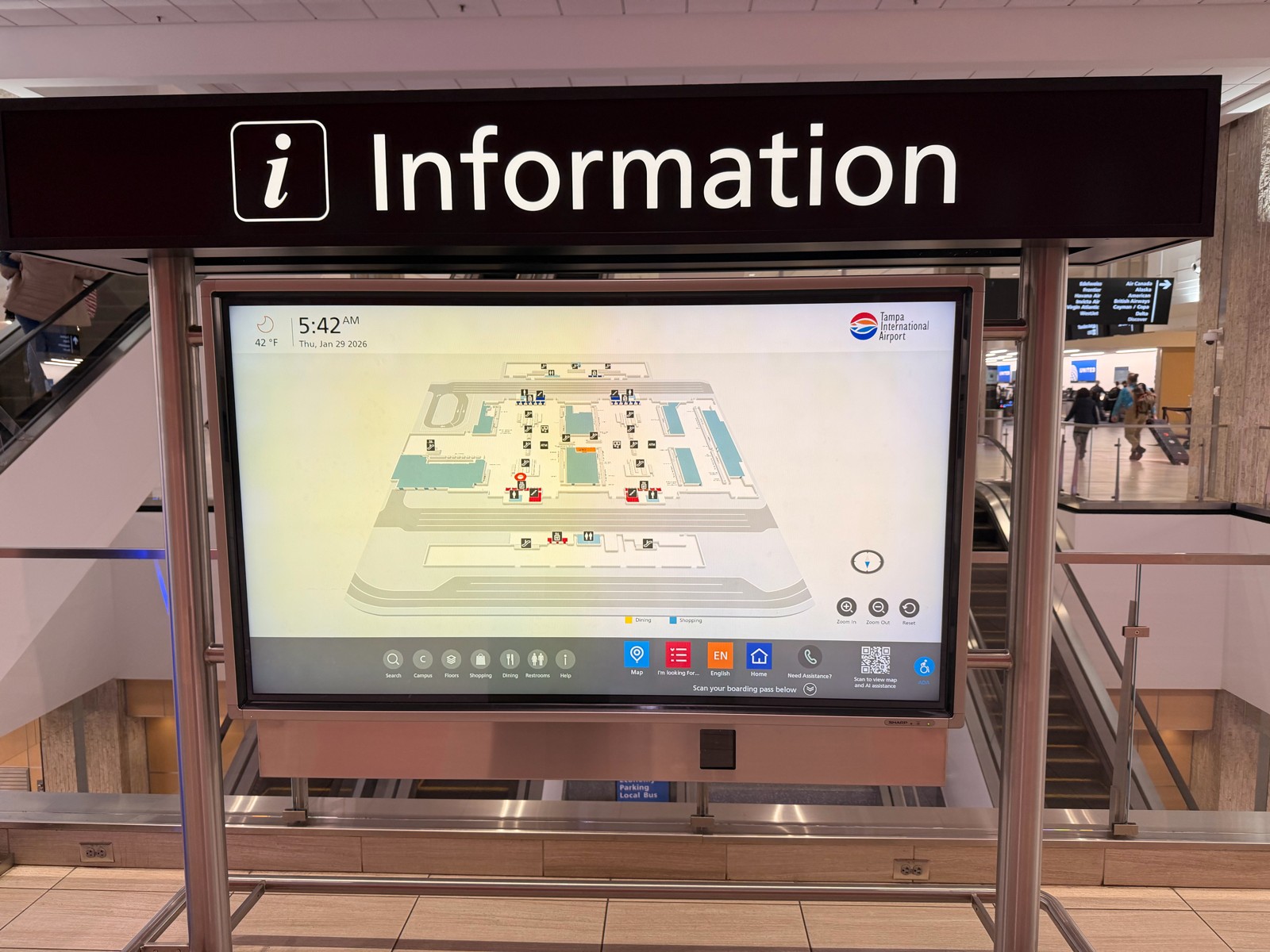
While SkyCenter One focused on employees and tenants, the next initiative addressed an entirely different audience: Airport passengers.
The airport’s existing passenger-facing digital experience needed to be modernized. The UI/UX was outdated, the mapping lacked clarity, there was no mobile functionality, and AI assistance wasn’t part of the equation.
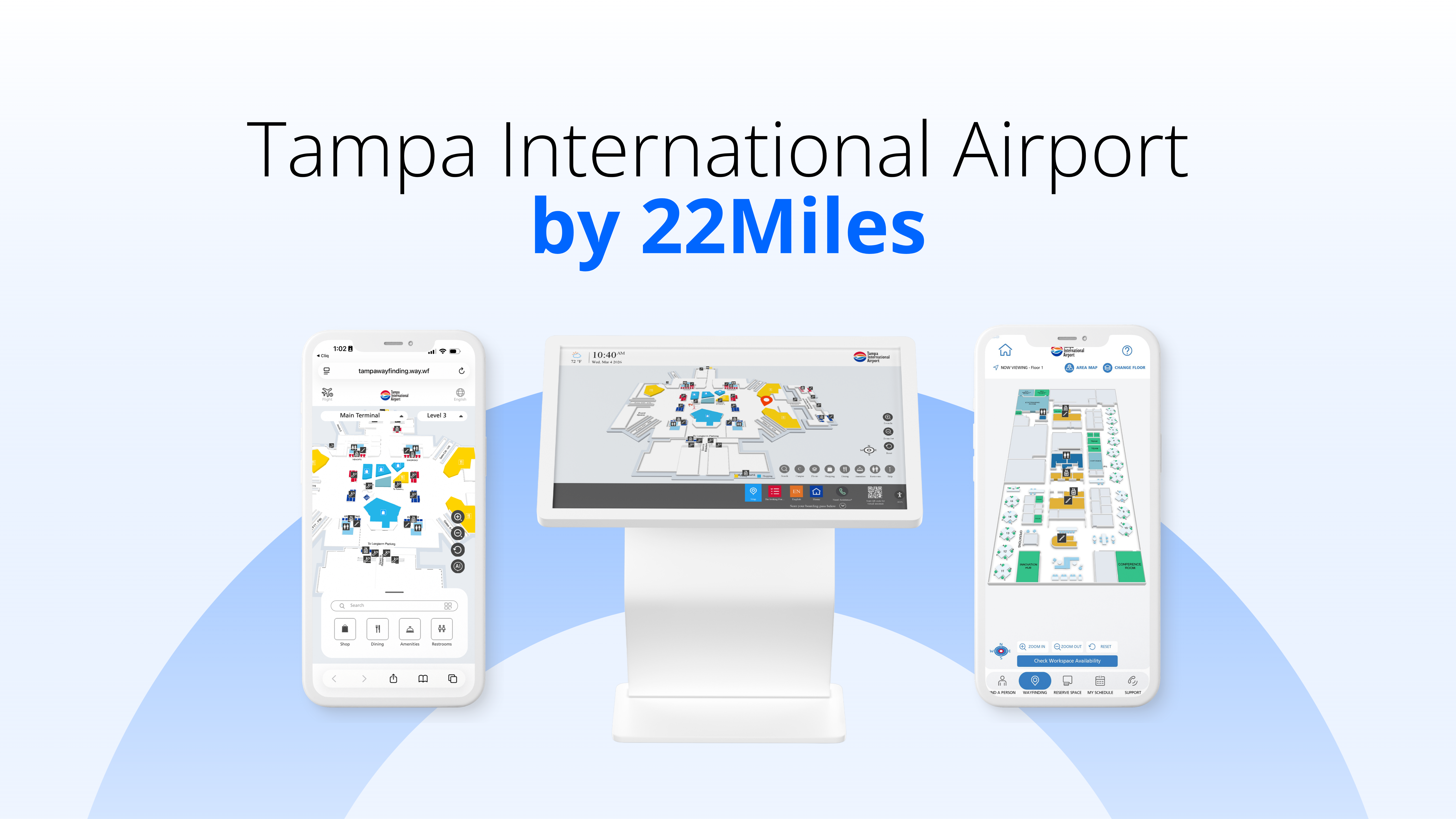
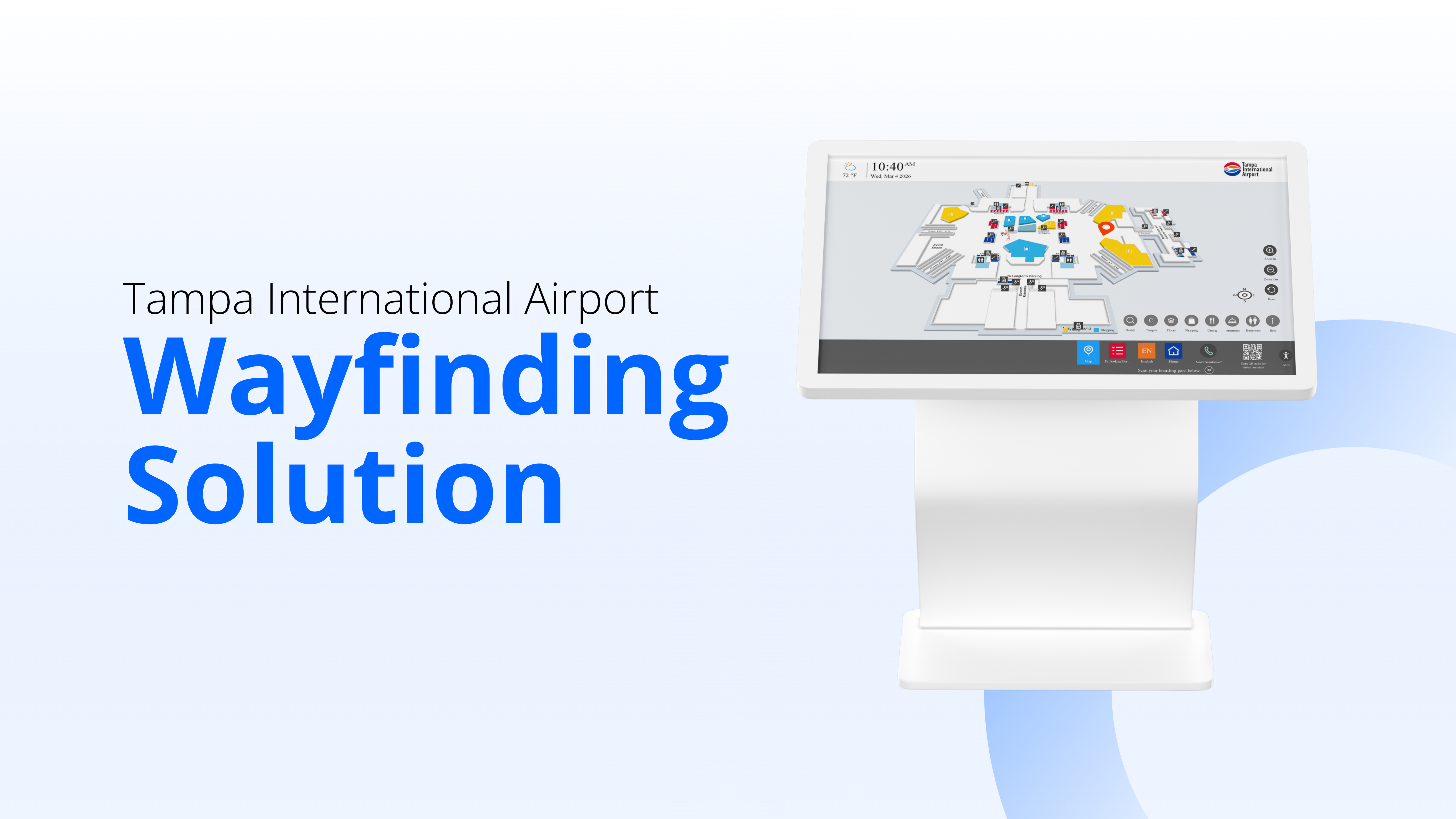
Working again with system integrator AVI-SPL, 22Miles began replacing the previous platform across the airport’s interactive touchpoints, deploying:
- 20 interactive touchscreens
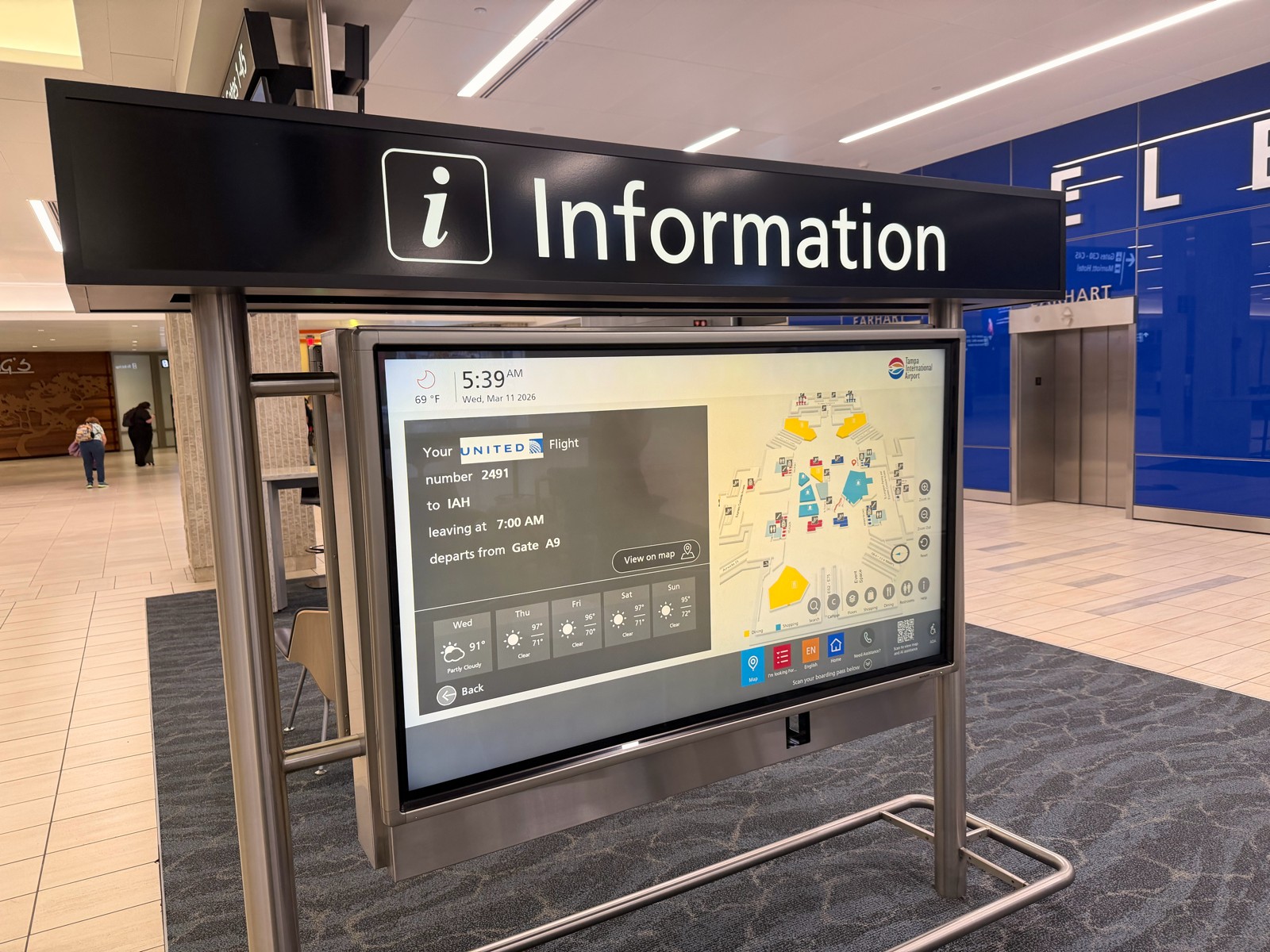
- RFID boarding pass scanners for instant gate lookup
- Real-time FIDS (Flight Information Display System) integration
- Live gate, delay, and amenity data feeds
- Multi-language support
- AI-powered assistant for traveler questions
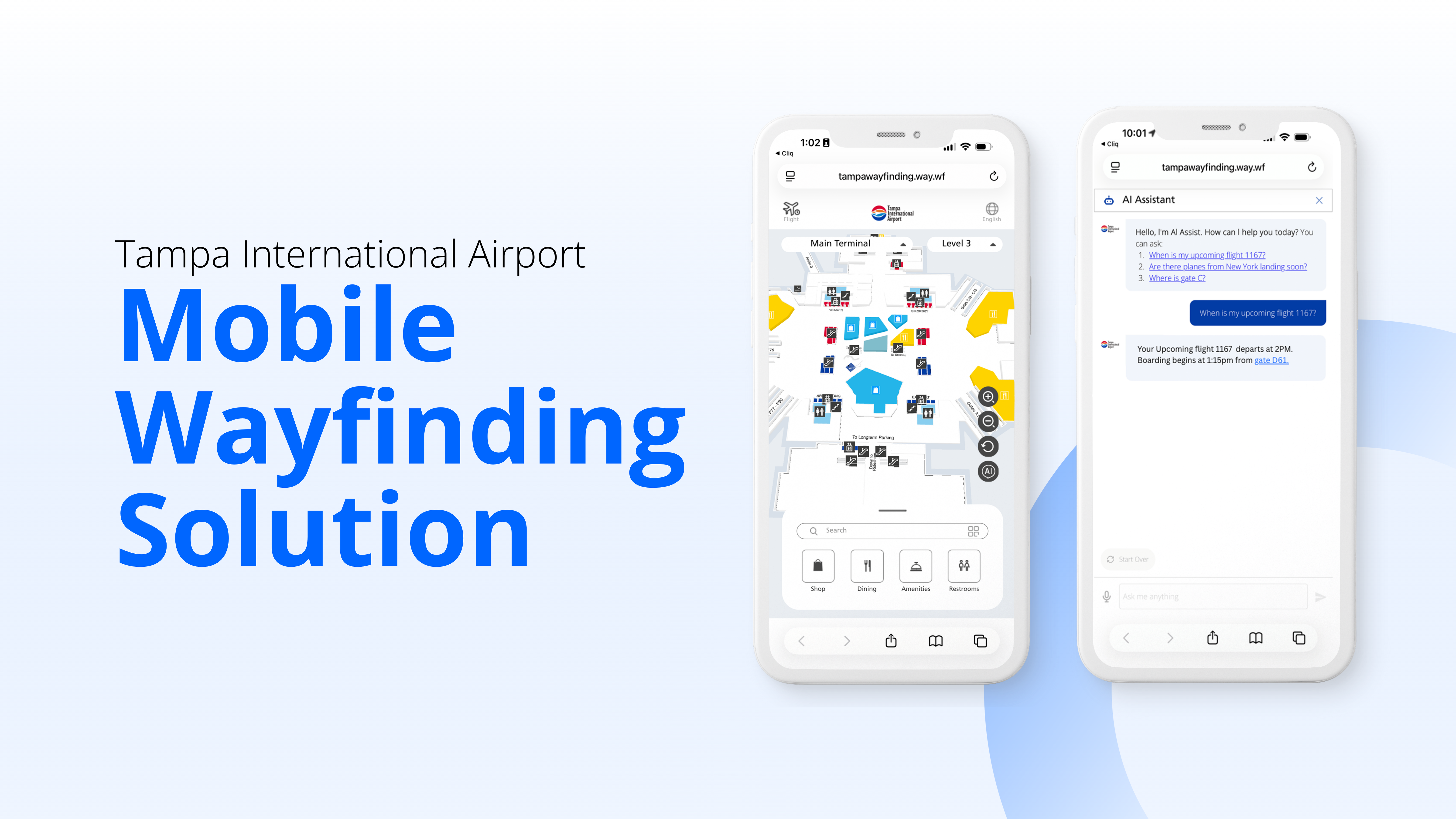
- Push-to-mobile via custom mobile web URL
- Enhanced 3D mapping and intuitive UI/UX
- Full analytics on all usage, wayfinding searches, and clicks
Passengers can now scan their boarding pass, instantly locate their gate, receive interactive wayfinding directions, and push directions directly to their phone.
The AI assistant, one of the earliest traveler-facing AI deployments of its kind in an airport environment, further elevates the experience by helping travelers find amenities, services, and real-time flight information without friction.
This wasn’t simply a visual redesign. It was the activation of live data and integrations in a public-facing environment. And while it was a separate initiative from the headquarters project, the earlier success made it possible. The organization had already proven that its CMS and wayfinding framework could perform reliably in a demanding operational setting. That’s what scaling should look like. Not a dramatic leap, but a logical next step.
The Balance Between Infrastructure and Interaction
It’s tempting to frame backend systems and front-end interaction as separate conversations, but in reality, they’re interdependent.
A beautifully designed interface without dependable integrations erodes trust almost immediately. A robust backend that is hard to interact with intuitively limits adoption.
Strong spatial environments require both, but not necessarily at the same time.
Starting with a manageable deployment allows teams to stabilize infrastructure. Expanding thoughtfully allows them to enhance interaction. Each phase reinforces the other.
Reducing Risk While Increasing Impact
There’s also a human side to scaling spatial experiences that leads to the common conundrum of too many cooks in the kitchen. Each team or department has its own stakes: leaders worry about budget exposure, IT teams worry about maintenance complexity, operations teams worry about disruption, and communication teams worry about user confusion.
Those concerns are all valid if not important. But rolling out too much too quickly magnifies the issues and leads to fractured collaboration when one priority is elevated over another.
A phased approach reduces anxiety across the organization. It sets measurable milestones and provides room to adjust so that every team’s needs are met. It ensures that when you do expand, you’re building on something proven rather than something theoretical.
The Strategic Takeaway for Organizations
If SkyCenter One proved that 22Miles can power the backend of a smart workplace, the airport terminal deployment proves something bigger: 22Miles can support and scale every digital connection and interactive experience, from secure enterprise systems to high-volume public environments serving thousands of travelers daily.
This expansion demonstrates:
- Agility across audiences (employees vs. passengers)
- Flexibility across infrastructure types
- Seamless integration with real-time systems
- Advanced interactivity, including AI and RFID
- Future-proof digital design architecture
Most importantly, it shows that scaling isn’t just about adding screens. It’s about evolving from system backbone to user-facing experience, without breaking the digital ecosystem.
From SkyCenter One to the airport terminal, 22Miles has demonstrated the ability to move from invisible systems to unforgettable experiences.
We would love the opportunity to do the same for your organization.