October 5th, 2026
A recent Lavnch webinar, Building Connected Spaces: How to Scale and Manage Modern Visual Communications brought together Rich Ventura, VP of Professional Display Solutions at Sony, and Tomer Mann, Chief Revenue Officer at 22Miles, for a conversation hosted by Tim Albright. The topic on paper was hardware and software integration, but once the three got going, they discussed what actually separates an enterprise digital signage deployment that works from signage that becomes a maintenance problem eighteen months in.
A Screen Is Not a Strategy
Rich Ventura’s opening line was powerful: “If your conversation is truly, ‘Here’s a display,’ and that’s the end of your conversation, you’re not solving anything.”
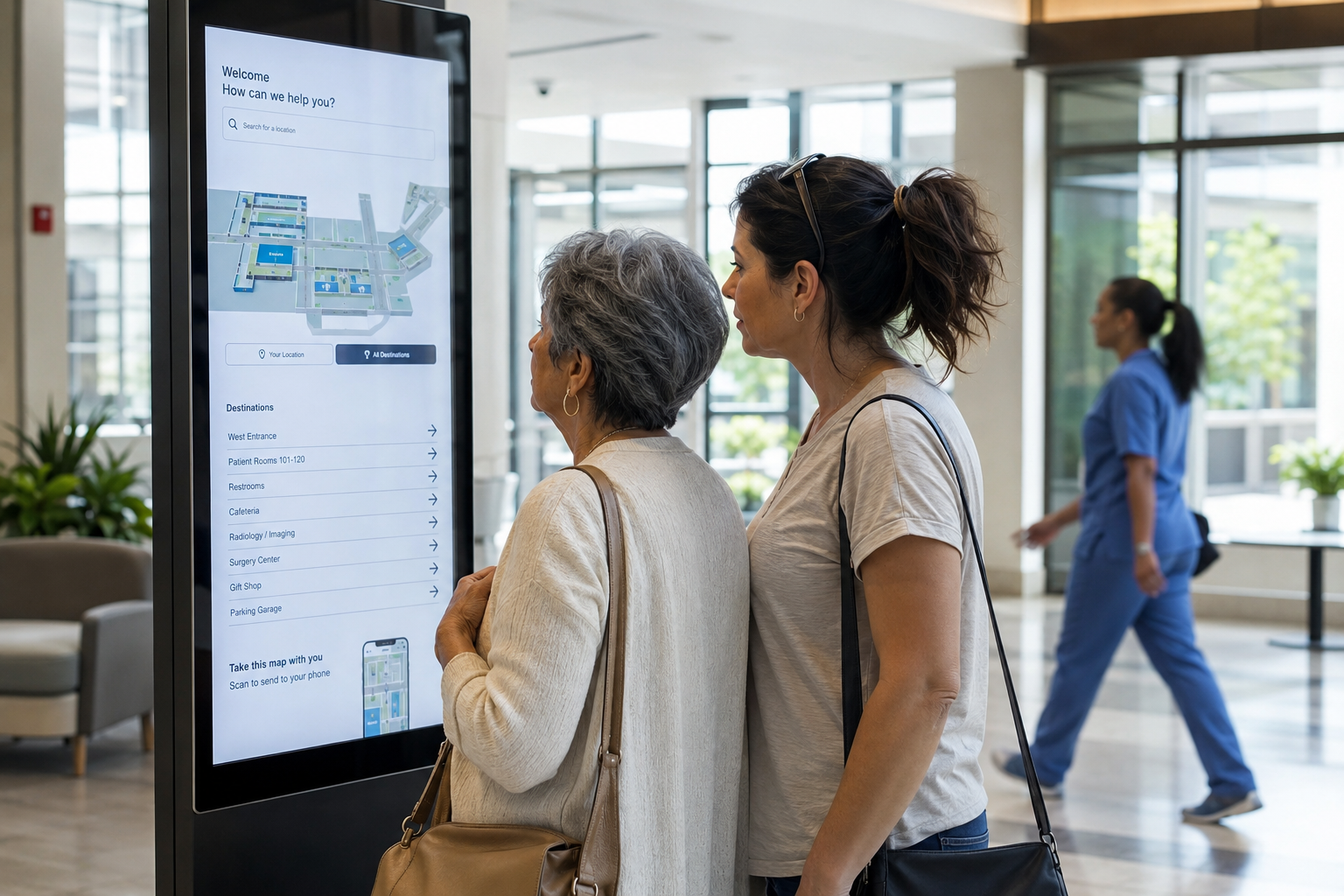
His point shifts the conversation from hardware quality to sequencing. A buyer who starts with the screen and works backward toward a use case usually ends up with a wall of displays and no clear answer for what they’re supposed to accomplish. However, a buyer who starts with the business outcome, for example, patient wayfinding for smoother navigation, room utilization to optimize space, or emergency communication for safety procedures, can get an enterprise digital signage system built to solve your organization’s unique needs.
Tomer Mann built on that same idea from the software side, urging that an ecosystem is what turns a screen into “one managed environment,” where the front-end experience stays consistent for the person using it and the back end stays consistent for the team running it. That’s the difference between an integration and a pile of haphazard products loosely wired together.
The Integration Buyers Don't See
Some of the most valuable insights in the conversation were about where that integration actually lives. Ventura explained that 22Miles’ software sits directly on Sony’s system-on-chip, describing the result as “install, hang, and bank” rather than juggling separate devices and settings. Mann added that DX Pro™, 22Miles’ enterprise visual experience platform, now includes Sony as a native widget built specifically for zero-touch provisioning, letting an installer configure and push content to an entire fleet of Sony displays from one platform instead of touching each screen individually.
A technician replacing a failed display in a 20-building university doesn’t necessarily know which content belongs on what specific screen or what settings it needs. With zero-touch provisioning, that configuration is already tied to the display’s MAC address before the technician ever shows up. They hang the panel, scan a QR code, and walk away.
Ventura called this a source of a specific, recurring failure mode in the industry: a 50- or 60-screen rollout where “one screen isn’t connecting right” or isn’t showing the right content, is a problem zero-touch provisioning is built to eliminate at the root rather than troubleshoot after the fact.
Let the Data You Already Have Do the Work
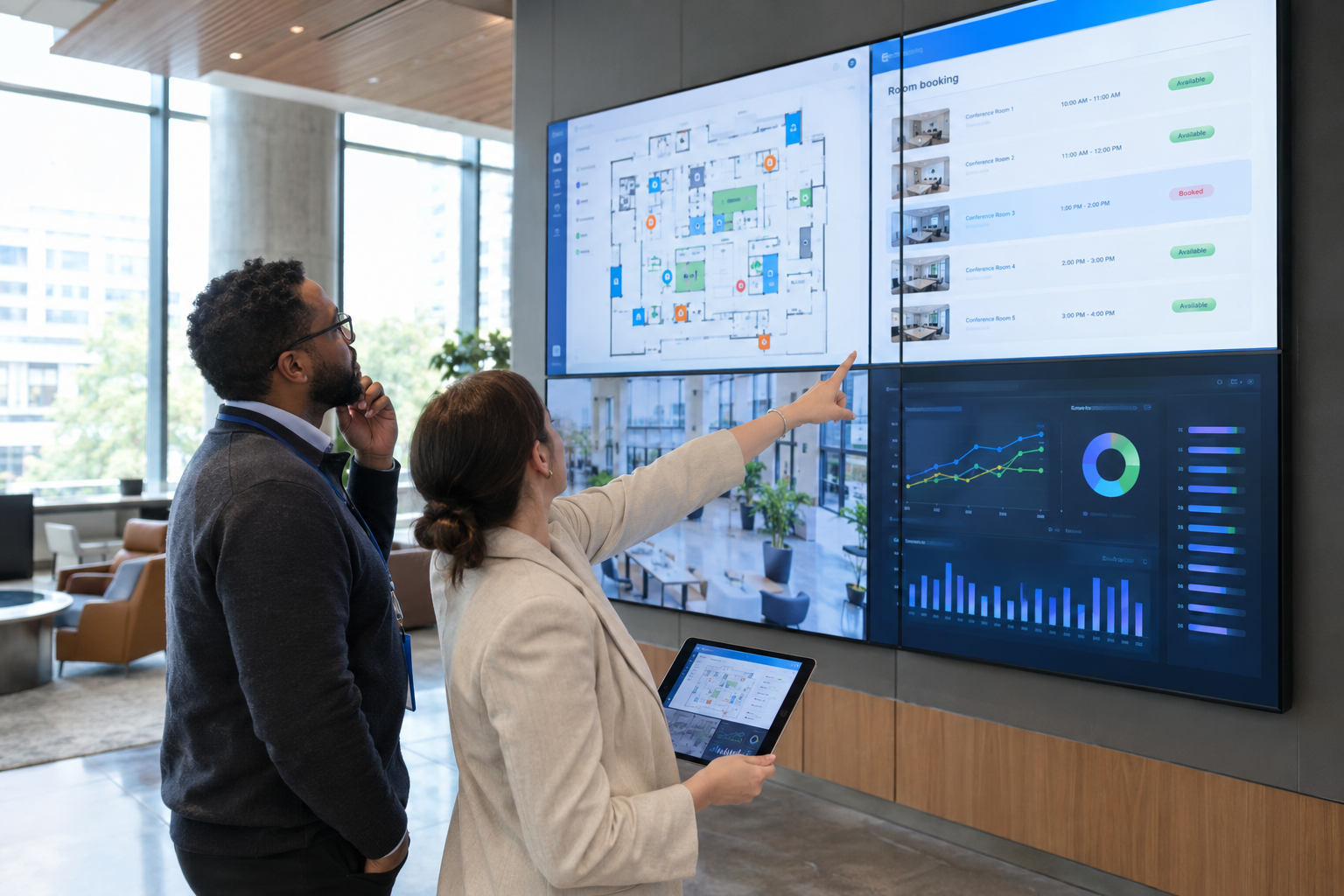
When asked where customers should start with automation, Mann led with Microsoft: Microsoft 365, Outlook calendars, room and occupancy data, SharePoint files, and Power BI dashboards. “Stagnation is a huge issue… the system just isn’t dynamic anymore. It’s old content from months ago, ” he explained.
An enterprise digital signage platform that has to be manually refreshed competes with every other priority on a communications team’s plate and generally loses. A platform that pulls data from sources that the organization already uses, like emergency alert systems, ticketing systems, and occupancy sensors, stays current because nobody has to remember to update it.
Security Is Not an Afterthought
Both speakers treated network security as a first-order design question rather than a compliance checkbox. Ventura described Sony’s display OS as deliberately locked down, with partner integrations reviewed closely before they’re allowed to touch the software layer.
Mann discussed 22Miles’ growing work with federal and regulated agencies, noting that those organizations have specific, well-understood requirements: an on-premises environment they control behind their own firewall, rather than a cloud or hybrid model. That’s consistent with how 22Miles talks about its on-premise government SKUs more broadly, dedicated deployment options built around a committed patching cadence rather than a best-effort one.
Return on Objectives, Not Just ROI
Ventura emphasized the importance of ROO, return on objectives or return on opportunity, as the thing to measure over ROI. He argued two similar businesses can deploy the same technology and land on completely different ROI numbers because ROI is an output, not a starting point.
“Coming out with a number is just a number if you don’t define the objectives, your goals, how you’re going to measure the effectiveness,” said Ventura. Skip that step, and a team ends up unable to justify expanding past a handful of locations because nobody agreed in advance on what success was supposed to look like.
That framing extends naturally to a key stakeholder question. Mann pointed out that a lot of digital signage isn’t revenue-driving by nature; wayfinding, room booking, and hoteling create efficiency and reduce stress for patients, employees, and visitors rather than generate a line of new income. Both speakers agreed the decision shouldn’t sit with finance alone; IT, facilities, communications, and often HR all have a legitimate stake in how the system gets defined and used.
Where the Ecosystem Goes Next
Looking ahead, Mann predicted the next phase is less about adding features and more about intelligence: enterprise visual experience platforms that work from defined rules and objectives rather than needing every screen told exactly what to show, moment to moment. He pointed to a recent project as a preview of where interactivity is headed: an LED video wall built for one client’s command center that responds to a connected touch table, and a separate, publicly reported project for Carvana, where visitors at new dealership locations can scan a QR code to take over a section of an interactive LED cube and configure a vehicle themselves.
The advice for anyone starting this process was simple and, in Ventura’s words, “really odd for a screen company to say,” but don’t start with the screens. Define what your organization is trying to accomplish first, think in one-, three-, and five-year horizons instead of today’s budget alone, and ask a lot of questions of vendors, integrators, and consultants, then actually listen to the answers instead of confirming a decision that was already made.
For organizations sorting through that process now, on-chip integration, zero-touch provisioning, and the range of automation and security options, 22Miles and Sony’s partnership brings together as a single enterprise digital signage platform.
Download our joint eBook to learn more or book a demo to discuss your goals.